
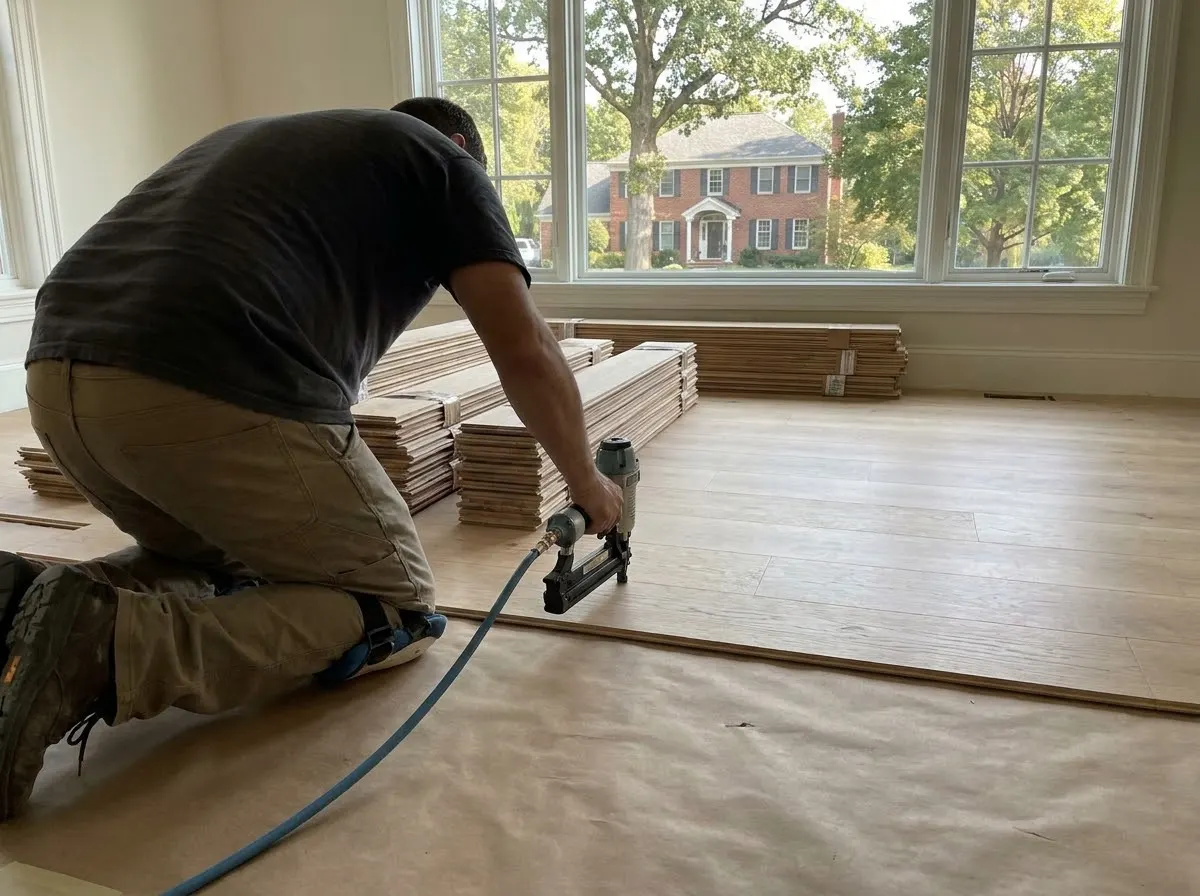
Solid vs. engineered hardwood: what the difference means for your home
Solid hardwood is milled from a single piece of wood. Because it can be sanded and refinished multiple times over its life, it is a common choice for main living areas and bedrooms where the subfloor is wood and moisture levels are relatively stable.
Engineered hardwood is made with a real wood veneer over a layered core. That construction makes it more dimensionally stable in conditions where humidity or temperature fluctuates. It is worth asking a contractor about for spaces over concrete slabs or in areas where solid wood may not be the right fit.
Neither option is universally better. A flooring contractor can look at your subfloor, your rooms, and how the spaces are used, and tell you which direction makes sense for your home.
Where each type tends to fit
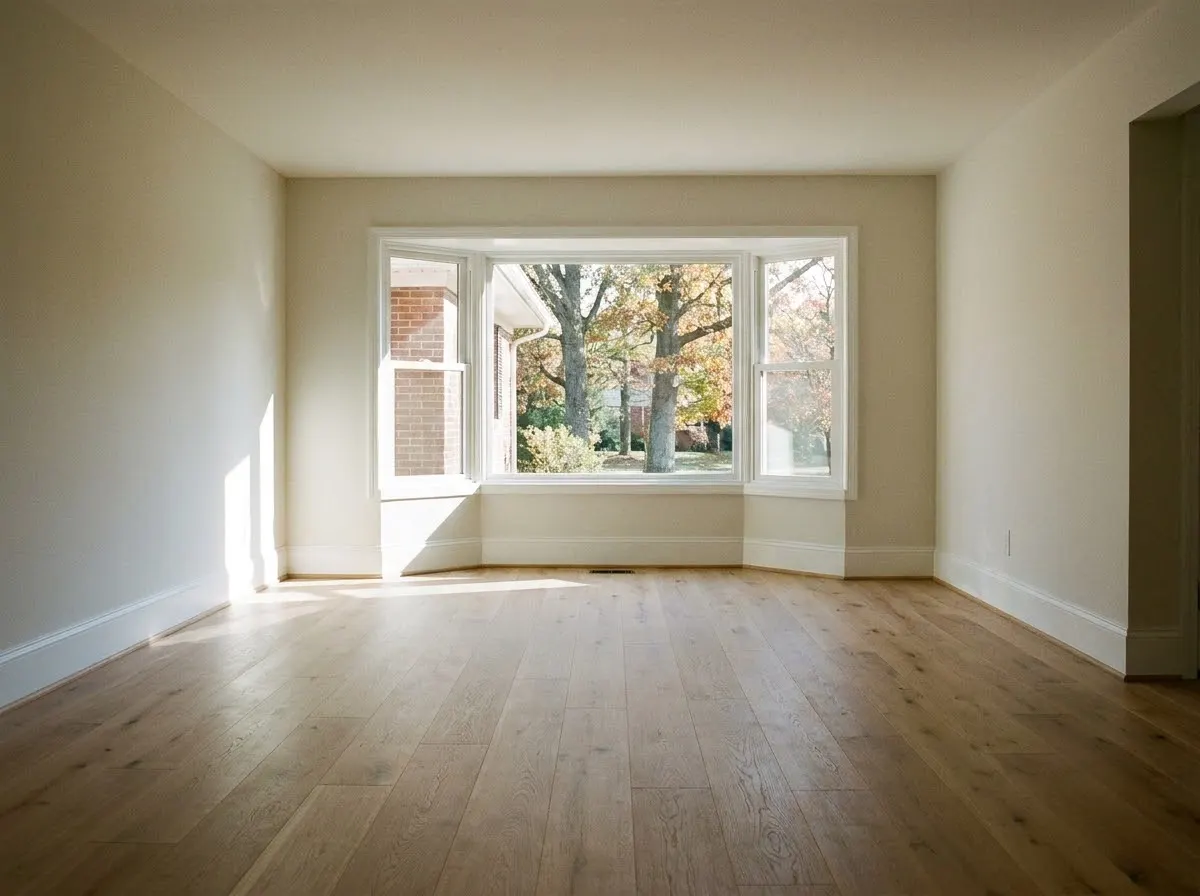
These are general patterns, not rules. Every home is different, and a contractor's assessment of your actual subfloor and conditions matters more than any general guidance.
- Main floors and bedrooms over wood subfloor: solid or engineered hardwood both tend to work well here
- Basements or slab-on-grade spaces: engineered hardwood is often the more practical choice, though a contractor should evaluate moisture levels first
- Kitchens and bathrooms: ask your contractor specifically, since moisture exposure varies a lot by household
What installation involves
Installing hardwood flooring is more than laying boards. A flooring contractor will typically remove the existing flooring, inspect and prepare the subfloor (addressing any soft spots, squeaks, or levelness issues), and allow the new wood to acclimate to the home's conditions before installation begins.
After the floors are down, the job includes fitting transitions between rooms and replacing or reattaching baseboards and trim. How all of that gets handled is worth discussing with your contractor before work starts.
Not sure which hardwood is right for my home?
Choosing between solid and engineered hardwood, figuring out the subfloor situation, worrying about matching existing floors, it adds up fast.
A local flooring contractor can look at your space and give you a clear recommendation and a quote.
Talk to a Local ContractorCompletely risk free & no obligation.
Matching or replacing existing hardwood
If you are adding hardwood flooring to a room that connects to existing hardwood, matching species, stain, and plank width matters. An exact match is not always possible, especially in older Northern Virginia, VA homes where the original wood may be a species that is harder to source today.
A contractor can show you samples and, in some cases, recommend refinishing the existing floors at the same time so everything reads as one continuous floor. That is a conversation worth having early.
Permits for hardwood floor installation
Fairfax County lists new floors as exempt from its interior-alteration permit requirement, but the county suggests confirming with Fairfax County Land Development Services. For other areas of Northern Virginia, ask your contractor whether your specific project needs a permit.
What affects the cost
Hardwood flooring quotes vary based on a number of factors:
- Square footage and room layout
- Whether you choose solid or engineered hardwood
- Species, grade, and plank width
- Condition of the existing subfloor and any prep work needed
- Whether old flooring needs to be removed
- Transitions, trim, and baseboard work
- Whether existing floors are being refinished at the same time to match
Choosing a contractor
Virginia contractors are licensed by the Department of Professional and Occupational Regulation (DPOR). Before hiring, use DPOR's License Lookup on its website to verify the contractor's license is current and to check for any disciplinary history.
DPOR recommends getting written estimates from more than one contractor, keeping any changes to the project scope in writing signed by both parties, and not paying the full amount until the work is complete. Licensed contractors are required by law to provide a written contract for residential work, signed by both of you.
For deposits, DPOR suggests no more than 10% down or $1,000, whichever is less. For special-order materials, no more than 30% upfront.
The site also covers hardwood floor refinishing if your existing floors may be salvageable, and vinyl plank and tile flooring if you are weighing other options.
Frequently asked questions
How do I know whether solid or engineered hardwood is right for my home?
The main factors are your subfloor type, the room's moisture exposure, and how the space is used. A flooring contractor can assess your specific conditions and give you a recommendation based on what they find, rather than a general rule.
Do I need a permit to install hardwood floors in Northern Virginia?
Fairfax County lists new floors as exempt from its interior-alteration permit requirement and suggests confirming with Fairfax County Land Development Services. For other parts of Northern Virginia, ask your contractor whether a permit is required for your project.
How do I check whether a flooring contractor is licensed in Virginia?
Virginia contractors are licensed by DPOR. Use the DPOR License Lookup tool on the DPOR website to confirm a valid license and review any past disciplinary actions. Always ask for a written contract signed by both parties before work begins.
===
Let a local contractor sort it out.
Call now or fill out the form to get connected with a local contractor serving your part of Northern Virginia.