
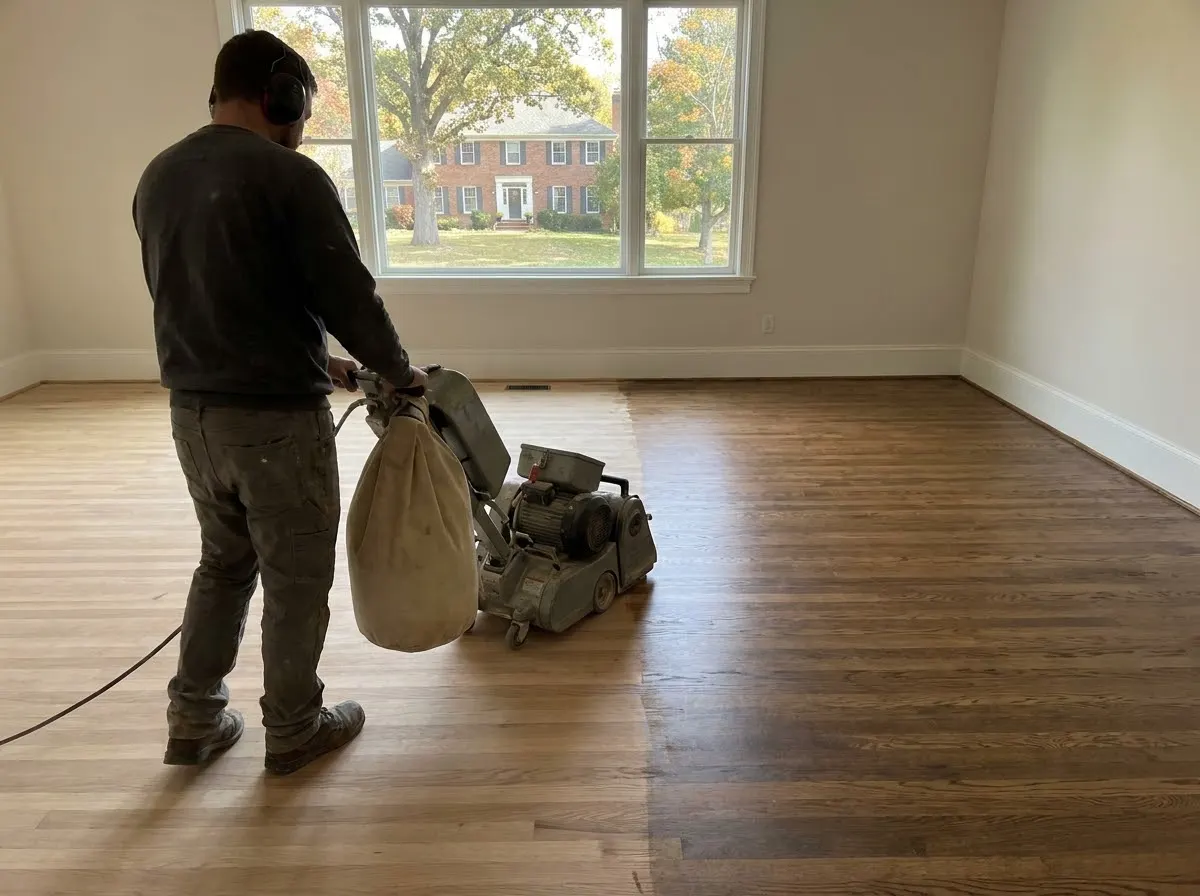
Signs your floors may be ready for refinishing
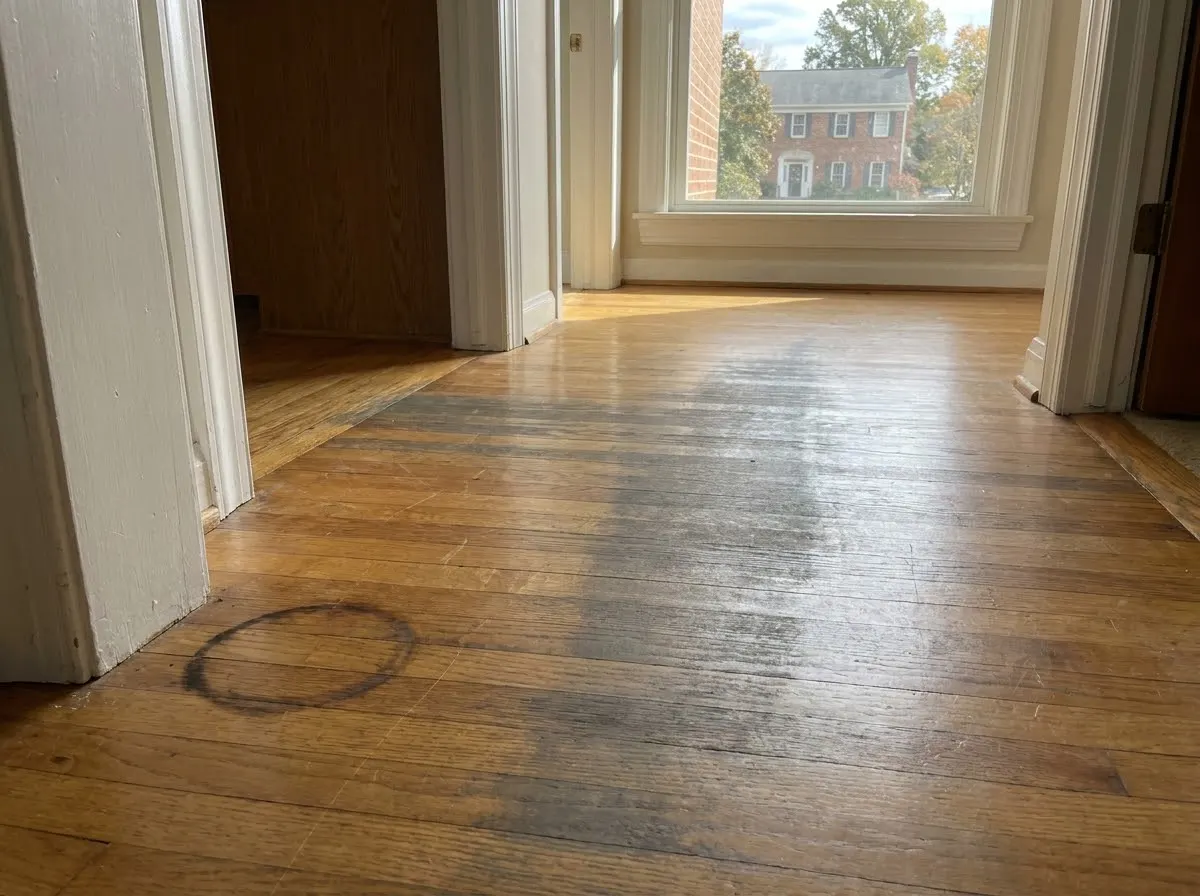
Hardwood floors give you a few clear signals when they need attention. A finish that looks gray or cloudy in high-traffic areas, scratches that catch light across the surface, dark water marks near doors or windows, or a dull flatness that cleaning can't fix, these are all signs worth having a contractor look at.
One thing worth noting: not every floor can be refinished. A contractor will check the thickness of the wood and how many times it may have been sanded before, and that assessment shapes everything that follows.
Full sand and refinish vs. screen and recoat
These are the two main approaches, and a contractor decides which one your floor can support.
A full sand and refinish removes the old finish and a thin layer of wood down to bare material, then applies new stain and finish coats. It addresses deeper scratches, gray wood, and water stains.
A screen and recoat is lighter. The existing finish gets scuffed lightly and a new topcoat is applied over it. It works when the finish is dull or lightly worn but the wood itself is still in good shape. It cannot fix deep scratches or gray wood.
Stain colors and finish types
If you are doing a full sand and refinish, you have the option to change the stain color entirely or match what you have. A contractor can show you samples on your actual wood, since the species affects how a stain reads.
Finish types vary too. Matte, satin, semi-gloss, and high-gloss each have different looks and maintenance characteristics. Oil-based and water-based products also behave differently during application and curing. Your contractor can walk you through the options.
Are my hardwood floors worth refinishing?
You walk past those scratched, dull floors every day and wonder if anything can be done without a full replacement.
A local contractor can look at the wood, tell you what it can take, and give you a straight quote.
Talk to a Local ContractorCompletely risk free & no obligation.
Hardwood under old carpet
Many older colonials, split-levels, and ramblers in Northern Virginia, VA were built with hardwood floors that were later covered with carpet. If you suspect you have hardwood underneath, a contractor can pull back a corner of carpet in a closet or along a wall to check the species, condition, and whether refinishing makes sense.
Living arrangements during the work
Refinishing does require the rooms being worked on to be cleared of furniture and left off-limits while coats dry. Ask your contractor what to expect for each phase so you can plan accordingly.
If the home was built before 1978 and any painted surfaces will be disturbed during the work, the contractor is required under the EPA's Renovation, Repair and Painting rule to be EPA-certified and to follow lead-safe work practices.
What affects the cost
No two jobs are priced the same. Factors that influence what a contractor quotes include:
- Square footage and number of rooms
- Whether the job is a full sand and refinish or a screen and recoat
- The species and current condition of the wood
- How many finish coats are applied
- Whether stain is added
- Furniture moving and any subfloor repairs needed
Choosing a contractor
Virginia contractors are licensed by the Department of Professional and Occupational Regulation (DPOR). You can verify a contractor's license status and check for past disciplinary actions using DPOR's License Lookup on its website.
A few other practices DPOR recommends: get written estimates from more than one contractor, keep any changes to the scope in writing signed by both of you, and do not pay the full bill until the work is complete. Licensed contractors are also required by law to provide a written contract for residential work, signed by both parties.
On deposits, DPOR suggests no more than 10% down or $1,000, whichever is less, for a standard job. For custom or special-order materials, no more than 30% upfront.
If you want to see other flooring options, the site also covers hardwood floor installation and vinyl plank and tile flooring.
Frequently asked questions
What is the difference between a sand and refinish and a screen and recoat?
A full sand and refinish removes the old finish and a thin layer of wood to address deep scratches, gray wood, and water damage, then applies new stain and finish. A screen and recoat lightly scuffs the existing finish and adds a new topcoat, and works only when the wood itself is still in good condition. A contractor inspects the floor to determine which approach is appropriate.
Do I need a permit to refinish hardwood floors in Northern Virginia?
Fairfax County lists new floors and floor refinishing among projects exempt from its interior-alteration permit requirement, but the county suggests confirming with Fairfax County Land Development Services. For other jurisdictions in Northern Virginia, ask your contractor whether your specific project needs a permit.
How do I verify a floor refinishing contractor in Virginia?
Use DPOR's License Lookup tool on the DPOR website to confirm the contractor holds a valid Virginia license and to check for any past disciplinary actions. Ask for a written contract signed by both parties before work begins, and get estimates from more than one contractor before deciding.
===
Ready to talk about your floors?
Call now or fill out the form to get connected with a local contractor who covers your area of Northern Virginia.